Cloud Security on Infinity : Attack-to-Defense Learning

Introduction: The Infinity Platform
Infinity is a hands-on cybersecurity learning platform designed to reflect how security operates in real-world environments. Instead of isolated labs or theory-driven instruction, it provides fully simulated enterprise scenarios where attacks, investigations, and defensive actions occur end to end.
The platform brings together Offensive Security ,Defensive Security , On-Premise Security , Cloud Security , Kubernetes Security, APT Labs , AI Security within a single ecosystem. Learners work with real systems and real telemetry, gaining clarity on how attacks unfold, how they are detected, and how effective defenses are built.
Infinity follows a challenge-based learning model, encouraging exploration and problem-solving rather than step-by-step guidance. This approach helps learners build practical skills and develop the security intuition needed for modern cybersecurity roles.
Cloud Security On Infinity
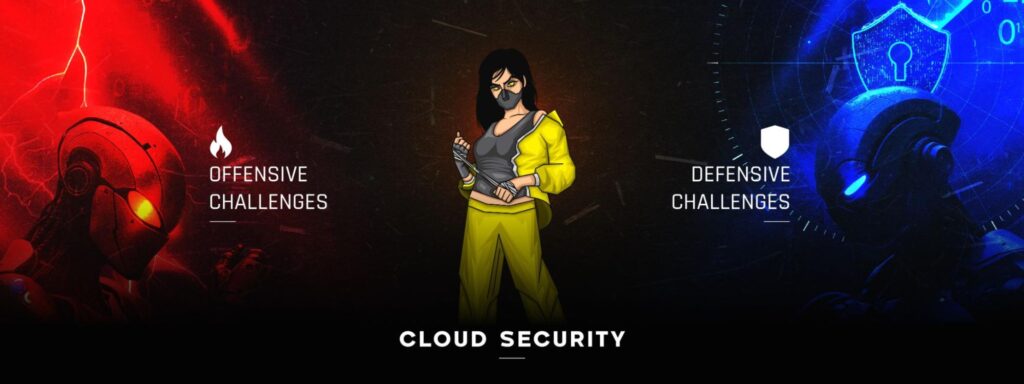
Most people approach cloud security from a single angle.
They either learn how attackers break into cloud environments or how defenders monitor and respond.
In real-world cloud breaches, those two worlds are inseparable.
Every incident is a story of what was exploited and what failed to catch it in time.
That’s the gap the Infinity platform by CyberWarFare Labs is designed to close.
Instead of treating cloud security as theory or separating offense and defense into isolated tracks, Infinity brings Offensive, Defensive, and Cloud Security together in one hands-on environment , through real challenges, real logs, and real misconfigurations.
What Makes the Infinity Cloud Platform Different
Infinity is not a traditional learning platform.
You’re not guided step-by-step, and you’re not solving artificial puzzles.
Instead, you’re dropped into real cloud environments with one goal : Figure out what’s broken, how it can be abused, and how it should have been detected.
Each cloud challenge is designed to mimic:
- Real IAM misconfigurations
- Real cloud identity abuse patterns
- Real service-to-service trust issues
- Real audit logs and telemetry gaps
This design forces learners to think like engineers, attackers and defenders all at once.
Understanding Cloud Security by Breaking It
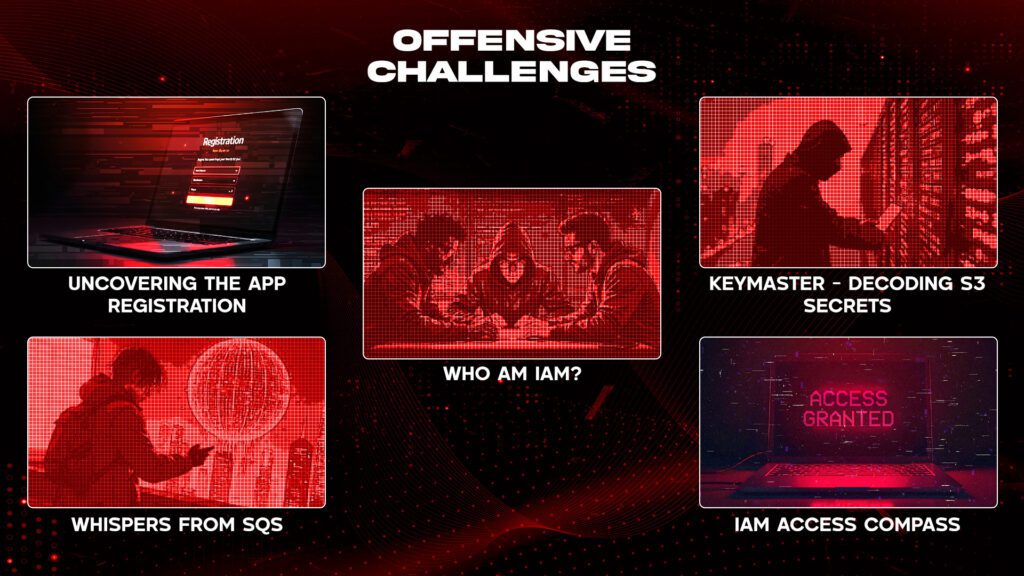
The offensive cloud domain on Infinity is about understanding how real compromises begin , not just how exploits work.
Learners investigate cloud environments to:
- Identify IAM misconfigurations
- Find over-permissioned roles and service accounts
- Abuse leaked keys, tokens, and poorly scoped permissions
- Pivot between services like compute, storage, IAM, and serverless
- Chain small missteps into full cloud compromise
Learners step into real cloud environments with real services and real permissions .
Just like a real attacker or analyst, you have to slow down, observe what’s happening, test ideas, and think creatively to move forward. Every decision matters, and the learning comes from figuring things out, not following instructions.
Understanding Cloud Security by Investigating It
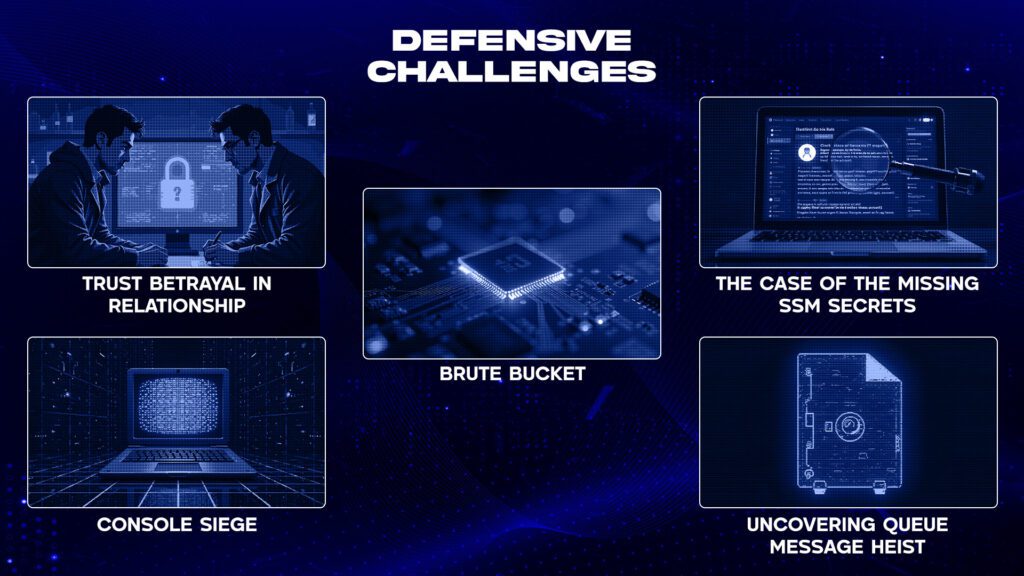
The defensive side flips the view. Instead of attacking, you step into the role of a cloud security analyst , but without the comfort of curated labs.
You deal with real telemetry, real noise, and real decisions:
- Review cloud-native audit logs and activity trails, from identity operations to resource creation.
- Spot unauthorized or anomalous access, privilege escalations, and service account abuse.
- Trace lateral movement inside cloud infrastructures.
- Correlate events across services , sometimes spaced out in time and context.
- Piece together indicators of compromise (IOCs) and build firm timelines of adversary behavior.
It’s not about memorizing a tool , it’s about thinking like a defender. Asking questions, following the breadcrumbs, connecting the dots.
Why Learning Both Sides Changes the Way You Think
In many real-world breaches, success happens because:
- An attacker succeeds because an offensive weakness exists
- They stay hidden because defensive visibility is missing
By practicing both offense and defense on the same platform, you learn:
- Which offensive techniques are practically invisible to standard logging
- Which detection rules are ineffective or too noisy
- How small, seemingly harmless misconfigurations chain into full compromise
- Why visibility and context matter more than just piling on tools
You’re not just learning to hack or to monitor , you’re learning to stay ahead of threats by anticipating both sides of the battle.
A Challenge-Based Platform , Not a Guided Course
Infinity is different from traditional “courses.” It doesn’t walk you step-by-step.
- Each lab contains multiple challenges
- Each challenge hides multiple flags to capture
- Success depends on exploration, persistence, and analysis, not on instructions
This approach trains you to think, debug, hypothesize , not just execute.
It makes you adapt, improvise, and stay sharp.
What the Infinity Platform Covers
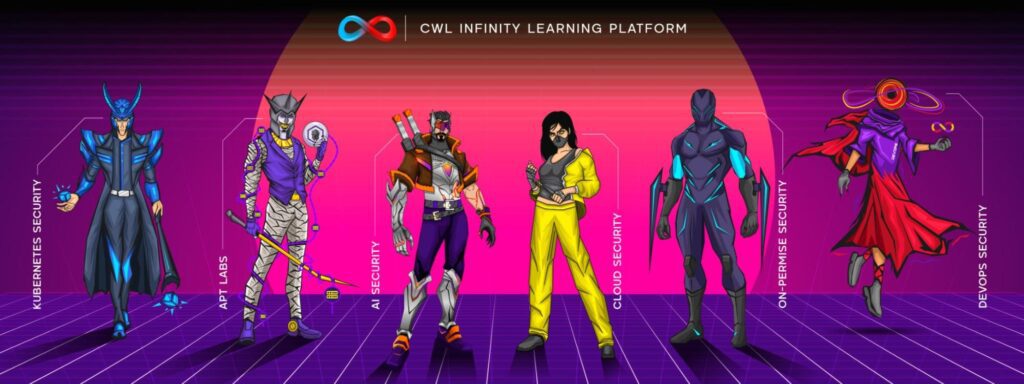
The scope is wide , it’s not limited to a single cloud or environment. Infinity offers labs across:
- AWS, Azure, GCP cloud platforms
- Cloud-native and on-premise infrastructure
- DevOps, Kubernetes, CI/CD pipelines
- Full Red Team, Blue Team AI Security challenges all in one place
It’s made for learners who want complete cyber defense fluency , from identity abuse to container escape, from cloud monitoring to alert engineering.
What You Actually Learn
- Skill diversity: Gain offensive, defensive and analytical skills , all in one learning path.
- Real-world realism: Labs mirror current cloud architectures, real misconfigurations, and genuine detection gaps.
- Adaptability: No fixed path , you learn how to think under pressure, adapt quickly, and fence unexpected threats.
- Deep insight: By toggling between attacker and defender, you intuitively understand what’s exploitable and what’s detectable.
Guidance Without Hand-Holding
Infinity is designed to challenge you , but it doesn’t leave you stranded.
If you get stuck during an investigation, the platform provides structured writeups that help you move forward without giving away the solution.
These writeups don’t just tell you what to click , they guide you on how to think during an investigation.
Alongside this, learners are also provided with:
- Attack flow diagrams that outline how the compromise unfolded
- Investigative mind maps to help structure analysis and connect signals
- Flag-based questions that must be answered after the investigation
This approach ensures that learners aren’t passively consuming instructions.
Instead, they’re validating their understanding by answering why something happened, where the breakdown was, and how it could have been detected earlier.
It balances guidance with exploration , exactly how real-world investigations work.
Conclusion
Cloud security isn’t about choosing between attacking or defending.
It’s about understanding how things go wrong and how to spot and stop it when they do.
Infinity brings both perspectives together in a way that feels real. You don’t just learn how attacks happen; you experience them, investigate the traces they leave behind, and connect every action to its impact. From breaking into cloud environments to piecing together audit logs and validating your understanding through challenges, the learning comes from doing the work.
And that kind of experience stays with you.
Because when you’ve followed a real attack from start to finish and truly understood why it worked, the lesson sticks.
That’s where real confidence comes from.
And that’s how meaningful cloud security skills are built.